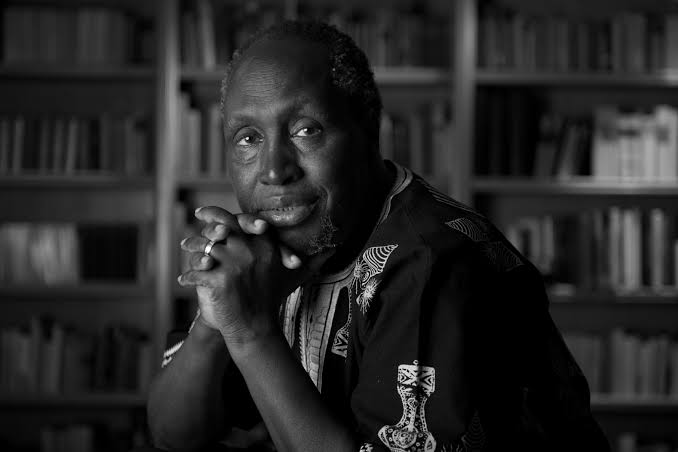
Ngũgĩ wa Thiong’o, born James Ngugi on January 5, 1938, in Kamiriithu village, Limuru, Kenya, was not just one of Africa’s most celebrated novelists and intellectuals—he was a lifelong revolutionary whose medium was language and whose message was freedom.
Raised in colonial Kenya during the turbulent years of the Mau Mau uprising, Ngũgĩ witnessed the devastating effects of land alienation, political repression, and cultural fragmentation. These experiences would shape the thematic core of his work: the collision between indigenous identity and imperial violence.
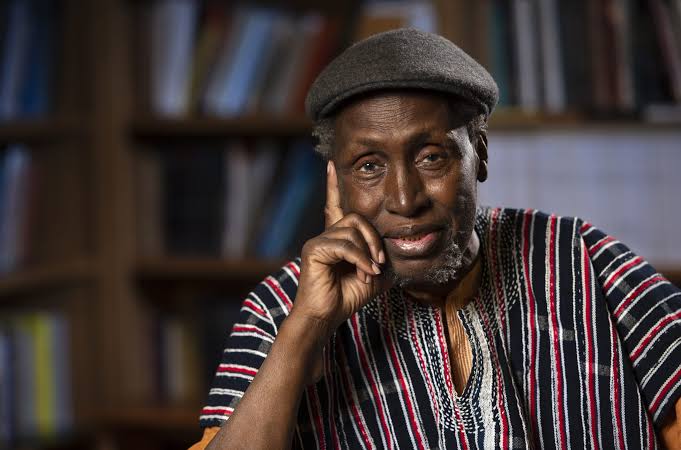
From James Ngugi to Ngũgĩ wa Thiong’o: A Literary Rebirth
Ngũgĩ’s early education took him from Alliance High School to Makerere University in Uganda, and later to the University of Leeds in the UK. His debut novel, Weep Not, Child (1964), was a literary landmark—the first novel by an East African published in English. It told the coming-of-age story of a young Kenyan boy against the backdrop of British colonialism and the Mau Mau rebellion.
It was followed by The River Between (1965) and A Grain of Wheat (1967), novels that cemented his reputation as a sharp critic of colonial and post-colonial governance in Kenya.
But in the 1970s, Ngũgĩ underwent a radical transformation—not just politically, but linguistically. He abandoned English, the language of the colonizer, and committed to writing in Gikuyu, his mother tongue. To Ngũgĩ, language was more than a tool of expression—it was a vessel of memory and identity. He argued that true decolonization required reclaiming African languages and storytelling traditions.
The Price of Truth: Prison, Exile, and Resistance
This ideological shift was more than symbolic. In 1977, Ngũgĩ co-wrote the play Ngaahika Ndeenda (“I Will Marry When I Want“) with Ngũgĩ wa Mĩriĩ.
Performed in Gikuyu by non-professional actors in Kamiriithu, the play directly challenged social injustice, capitalism, and government corruption. It drew massive crowds—and the wrath of the Kenyan state.He was arrested without trial and held in Kamiti Maximum Security Prison for a year. While incarcerated, Ngũgĩ wrote his next novel, Devil on the Cross (1980), on toilet paper—a rebellious act of literary defiance.
Upon his release, government harassment continued, forcing him into exile in 1982. He would go on to teach at several universities abroad, including Yale, NYU, and the University of California, Irvine.
Theory Meets Activism: Decolonising the Mind
In 1986, Ngũgĩ published Decolonising the Mind: The Politics of Language in African Literature—arguably his most influential non-fiction work. In it, he made a compelling argument for African writers to embrace indigenous languages and abandon the colonial ones that had long dominated African literary expression. The book is widely regarded as one of the most important texts in postcolonial studies.
Ngũgĩ’s work transcended fiction and criticism. He became a global voice for linguistic justice, cultural liberation, and African unity.
Later Works and Literary Legacy
Despite decades in exile, Ngũgĩ remained prolific. His satirical masterpiece Wizard of the Crow (2006), written in Gikuyu and later translated to English, is a sprawling political allegory about dictatorship and resistance in an imaginary African state.In 2020, he released The Perfect Nine, an epic myth-poem that reimagines the origin of the Gikuyu people from a feminist perspective. The book was longlisted for the International Booker Prize, confirming that even in his later years, Ngũgĩ remained at the forefront of literary innovation.
Death and Enduring Impact
Ngũgĩ wa Thiong’o passed away on May 28, 2025, at the age of 87. His death marked the end of a powerful era—but his ideas remain immortal.
To read Ngũgĩ is to confront the legacies of empire, to rethink the politics of language, and to embrace the power of storytelling in rebuilding identity. He did not just write books; he opened intellectual battlegrounds.
As African writers, thinkers, and activists continue to wrestle with the meaning of liberation, they do so in the long, powerful shadow of Ngũgĩ wa Thiong’o—a giant who never stopped believing in the word.