The rumble of vintage engines echoed across Nairobi Ngong Racecourse on Sunday morning, a sound that transported over 10,000 spectators back through nearly a century of automotive history. Chrome gleamed under the September sun as collectors, enthusiasts, and curious families gathered for the 53rd Africa Concours d’Elegance, an event that has evolved far beyond its origins as a simple car show.
At the heart of the display sat a 1928 Ford Model A pickup, its weathered elegance commanding respect as the oldest entry in this year’s competition. Nearby, a rare 1934 Rolls Royce Boattail drew crowds with its sweeping curves and meticulous restoration. In the motorcycle section, a 1925 Triumph 550 SD stood as a testament to engineering from an era when motorcycles were still finding their identity.
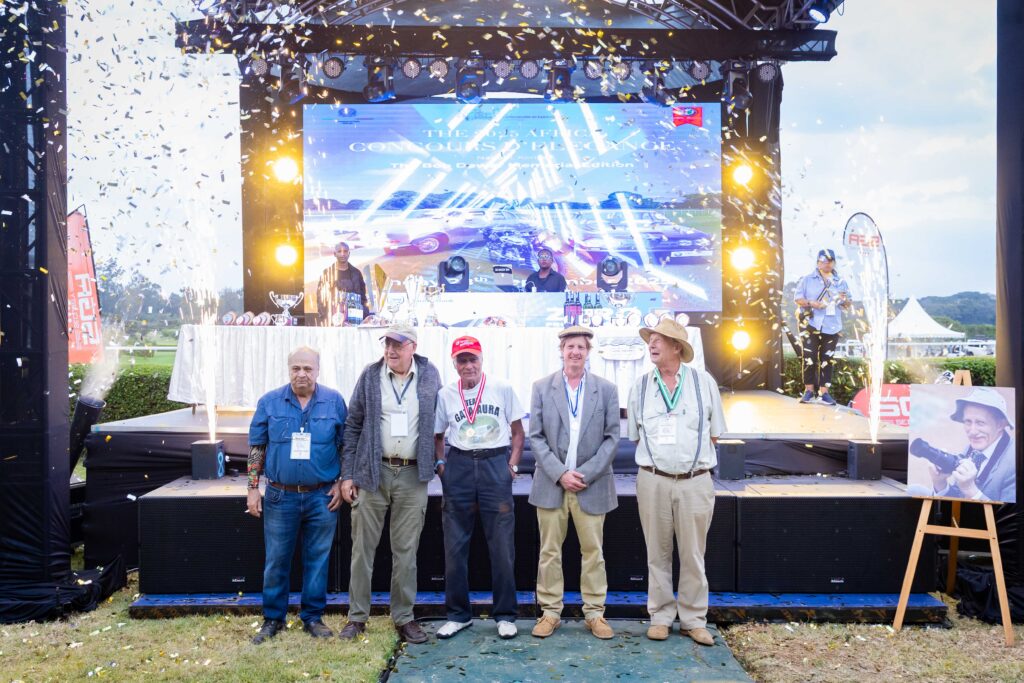
This year’s edition, the Bob Dewar Memorial Edition honoring the event’s founder, brought together over 70 vintage and classic cars and 40 motorcycles, each representing countless hours of restoration work, mechanical expertise, and historical research. Competitors traveled from Uganda, Tanzania, and Zimbabwe, transforming the racecourse into a continental celebration of motoring heritage.
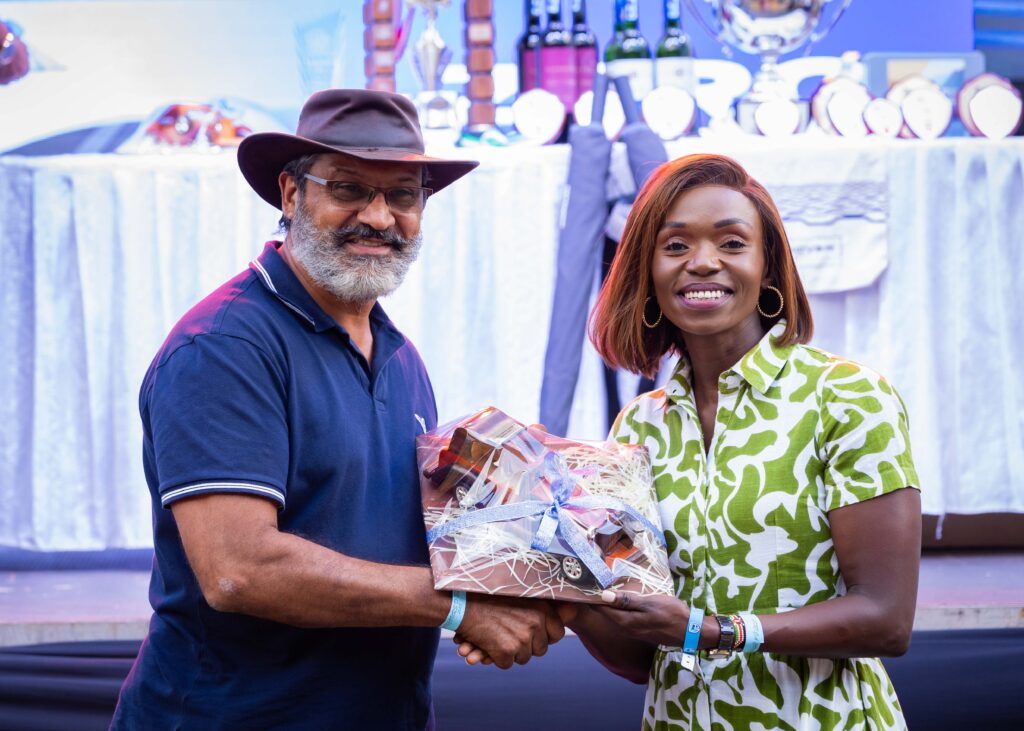
“Concours d’Elegance is not just about classic cars and motorcycles. It is about preserving history, creating jobs, boosting tourism and inspiring future generations,” said Lilian Onyach, Head of Brand and Marketing at Stanbic Bank Kenya, which sponsored the event. “Supporting it allows us to honor Kenya’s heritage while fueling the businesses and artisans who keep these machines alive.”
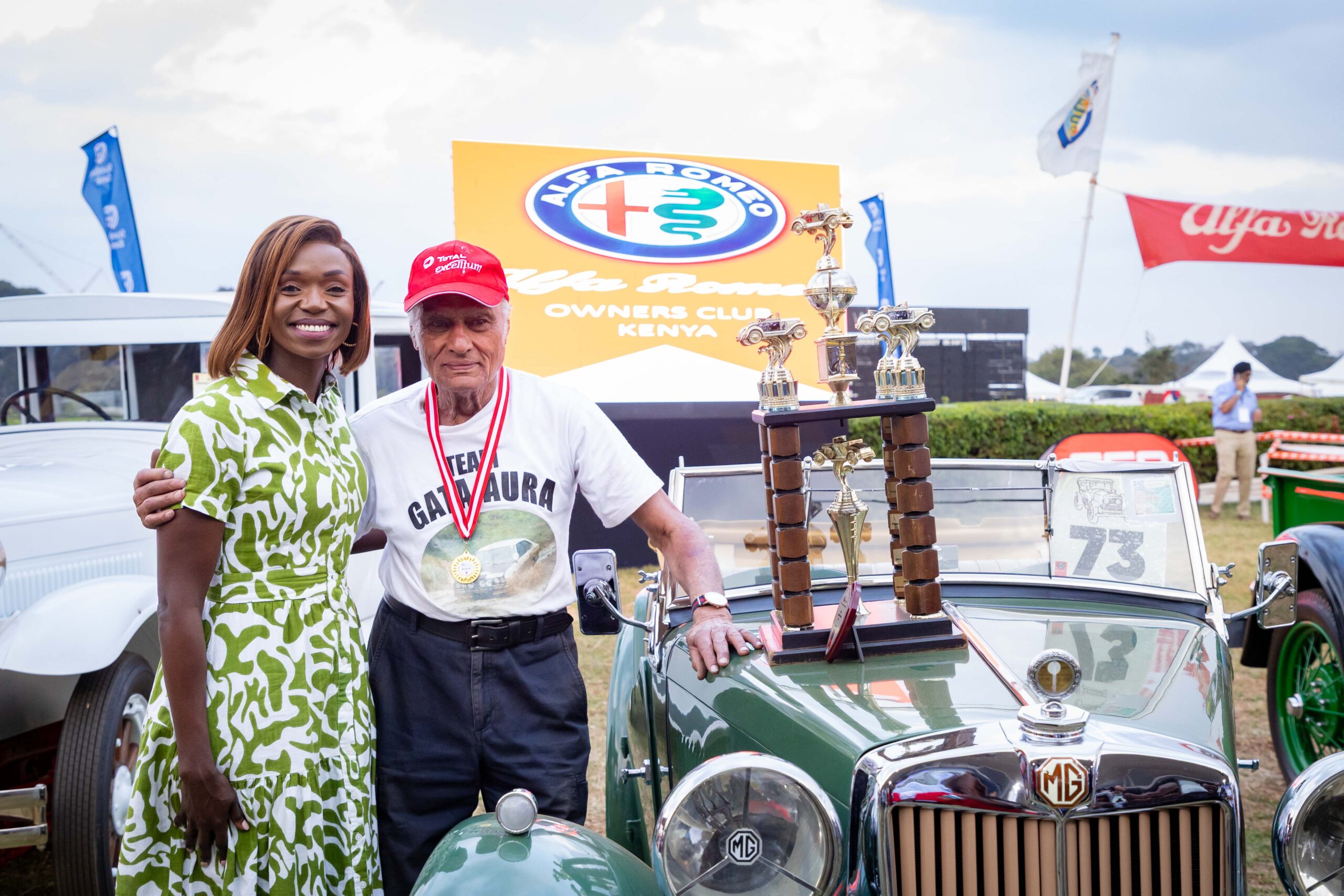
For Sati Gata-Aura, Sunday represented a triumphant return. His immaculately restored 1947 MG TC scored 277 points, earning him his second consecutive overall victory and cementing his reputation as one of East Africa’s premier restorers. Last year, he claimed top honors with a 1977 Nissan 160J, demonstrating his versatility across automotive eras.
James Duder’s 1928 Ford Model A pickup secured second place with 272 points, while Mike Duder’s 1930 Essex Super Six took third with 258 points. The judging criteria, focused on authenticity, condition, and elegance, rewards attention to detail that goes far beyond a simple polish job. Original parts, period-correct modifications, and historically accurate color schemes all factor into scores that can make or break years of restoration work.
In the motorcycle category, Dominique Antoine’s 1925 Triumph 550SD emerged victorious with 179 points, narrowly edging out Rick Agagliate’s 1926 Triumph 550SD at 167 points. Douglas Kiereini’s 1980 Yamaha RD400G, a relative newcomer at 157 points, represented the event’s expanding timeline, which now encompasses machines from the 1920s through the 1980s.
“The entries included many new vehicles not seen at the Racecourse before and we were excited at the excellent level of finish that was on display,” said Peter Wanday, Chairman of the Alfa Romeo Owners Club and event organizer. “Our spectators experienced an unforgettable show.”
Behind each gleaming vehicle lies a network of specialized mechanics, parts fabricators, upholsterers, and paint specialists who keep Kenya’s classic car culture alive. Many work in small workshops scattered across Nairobi’s industrial areas, fabricating parts that haven’t been manufactured in decades and sourcing rare components through international networks of collectors and dealers.
The economic impact extends beyond restoration workshops. The event itself creates temporary employment for event staff, security personnel, food vendors, and service providers. More significantly, it positions Kenya as a destination for automotive tourism, attracting visitors who combine their passion for classic vehicles with safari experiences and cultural exploration.
Since its inception in 1971, the Africa Concours d’Elegance has grown from a local gathering of car enthusiasts into a continental institution. FIM-Africa, the sport’s governing body for motorcycling in Africa, has recognized the event since 2006, making it the only competition of its kind on the continent with official continental status.
For spectators, many of whom arrived with children in tow, the event offers something increasingly rare in Kenya’s digital age: a tangible connection to mechanical craftsmanship and historical preservation. Families wandered between displays, parents explaining the significance of running boards and suicide doors to curious children more familiar with touchscreens than carburetors.
The blend of engineering, artistry, and storytelling creates an experience that transcends typical car shows. Each vehicle carries its own narrative—of original owners, modification history, restoration challenges, and the passion that drove someone to invest years bringing a forgotten machine back to life.
As the afternoon sun cast long shadows across the racecourse, engines fired up one final time, their distinctive sounds—from the throaty rumble of American V8s to the precise mechanical whir of British inline engines—providing a chorus that no modern vehicle can replicate.
The 53rd edition of Africa Concours d’Elegance demonstrated that in an era of electric vehicles and autonomous driving, there remains a profound appreciation for the mechanical artistry of previous generations. The question isn’t whether these machines remain relevant, but how long Kenya’s community of restorers, collectors, and enthusiasts can sustain the specialized knowledge required to keep them running.
For now, at least, the chrome still gleams, the engines still roar, and thousands still gather to celebrate automotive heritage that connects Kenya to a global story of innovation, craftsmanship, and the enduring human desire to preserve beautiful machines.