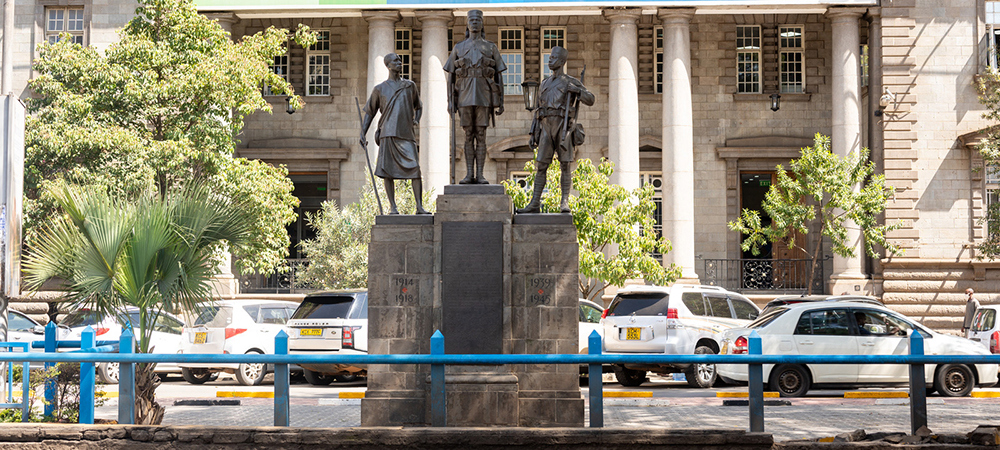
For many years, the history of the world wars in Kenya has remained largely invisible in public consciousness, despite the country’s deep and often overlooked involvement in both conflicts. War cemeteries and memorials exist across towns and cities, yet many Kenyans pass them daily without fully understanding their meaning or the stories they hold. The Commonwealth War Graves Commission (CWGC) is working to change this through education, outreach, and heritage programmes that reconnect communities with their past.
A History Hidden in Plain Sight
Across Kenya, the First and Second World Wars shaped lives in ways that are still being uncovered today. Thousands of Africans served as soldiers, porters, and support personnel, many of whom never returned home. Yet for decades, their contributions were not widely documented in public education or community narratives.
CWGC’s work begins with restoring visibility to these forgotten stories. Through its archives and public engagement programmes, families are encouraged to share names of relatives who may have served during the wars. In many cases, this leads to surprising discoveries that reconnect people with lost or unknown family histories.
Bringing Learning Into Living Spaces
A key part of CWGC’s mission is education, led in Kenya by Education Officer Rose Maina. Her approach focuses on storytelling and experiential learning, helping students understand history not as abstract events but as lived human experiences.
Much of this work takes place at the Nairobi War Cemetery, where school groups are invited for guided tours and structured learning sessions. For many schools, particularly those with limited resources, these visits offer rare access to immersive historical education outside the classroom.
While some teachers initially view cemeteries as unconventional learning spaces, the experience often shifts their perspective. The environment becomes a place of reflection, curiosity, and meaningful engagement with history.
Teaching the Human Cost of Global Conflict
CWGC’s educational programmes go beyond military timelines and battlefield narratives. Students are introduced to the role of East Africa during the world wars, including recruitment systems, labour contributions, and the movement of troops across the region.
These lessons highlight the scale of African participation and help learners understand the personal sacrifices behind historical events. Many soldiers never returned home, leaving families without closure for generations.
A central theme in these sessions is the human cost of war. Students are encouraged to reflect on how conflict affects communities long after it ends, shaping identities, memories, and social structures.
Opening Cemeteries to Communities
For decades, many CWGC sites in Kenya were viewed as distant or foreign spaces, often associated with colonial history rather than local heritage. The Commission is actively working to change this perception by opening these spaces to the public.
Through guided tours, heritage trails, local guide training, and community events, CWGC is transforming cemeteries into accessible heritage sites. Visitors are introduced to the history behind each site and the individuals buried there, helping to create a deeper sense of connection.
This shift is gradually redefining these spaces as part of Kenya’s shared historical landscape rather than isolated monuments.
Confronting Gaps in Recognition
A key aspect of CWGC’s work involves addressing historical inequalities in remembrance. The Nairobi African Memorial stands as a reminder that many African soldiers were commemorated collectively rather than individually.
CWGC acknowledges this gap openly and continues efforts to restore individual identities through archival research and record preservation. This process is ongoing, reflecting a broader commitment to more inclusive remembrance practices.
Restoring Memory and Meaning
CWGC’s educational and outreach programmes in Kenya are helping reshape how communities understand their past. What was once a largely forgotten chapter of history is gradually being brought back into public awareness through schools, families, and community engagement.
At the heart of this work is a commitment to dignity and recognition. By reconnecting people with stories of service and sacrifice, CWGC is ensuring that African contributions to the world wars are no longer overlooked but remembered as an integral part of both Kenyan and global history.