For many young women growing up in Kenya’s informal settlements, the future is often mapped out before they have a chance to imagine it.
Low-paying casual jobs, early motherhood, and limited access to training leave few options for long-term economic stability.
CFK Africa wants to widen that horizon.
The international nonprofit organization has received support from the Weyerhaeuser Family Foundation to launch Women at Work, a new vocational training initiative aimed at helping women in informal settlements break into higher-paying skilled trades.
Slated to begin in early 2026, the program will train women in plumbing, electrical work, and auto mechanics—fields that remain overwhelmingly male-dominated despite growing demand for skilled labor. The initiative will focus on teenage mothers and other young women who are often excluded from technical training opportunities.
What sets Women at Work apart is its mentorship model. Participants will learn directly from Master Craftswomen, women who have already built successful careers in these trades and understand the barriers young women face.
“The best way to learn a job is by working alongside someone who has done it,” said CFK Africa Chief Executive Officer Jeffrey Okoro. “When women teach women, skills are transferred—but so is confidence.”
The pilot phase will reach 80 young women across five informal settlements in Kenya. Alongside hands-on technical training, participants will receive guidance on job placement, helping them transition into employment or apprenticeships after completing the program.
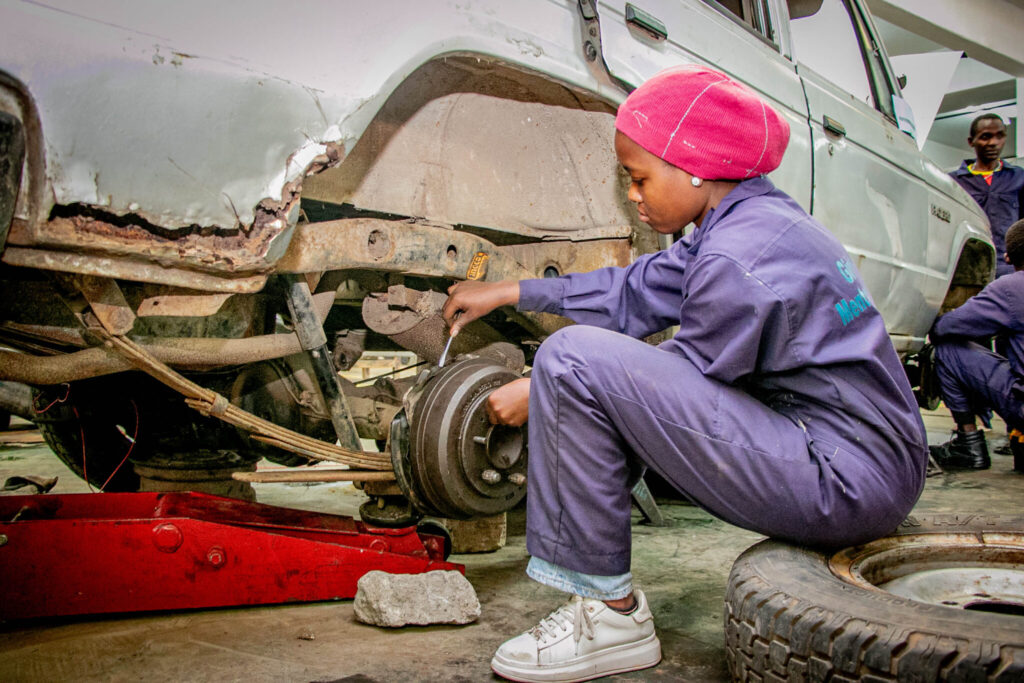
Women at Work builds on CFK Africa’s TechCraft initiative, launched last year to help young people in settlements such as Kibera gain market-ready skills and improve their earning potential.
Funding for the new program comes through the Weyerhaeuser Family Foundation’s International Initiative, which supports efforts that promote opportunity and well-being for women and girls in developing countries.
According to Okoro, the goal is not only to teach a trade, but to create lasting economic security.
“When it comes to vocational skills, there is no substitute for real work experience,” he said. “This program is about opening doors that have been closed to women for far too long.”
For the young women preparing to join Women at Work, the program represents a rare chance to step into spaces where they have long been told they do not belong—and to build futures defined by skill, independence, and choice.
For More information Visit CFK Africa’s Women at Work program